
One Customer Record, From First Quote to Final Invoice
Ask a reseller where their customer data lives and you usually get two answers. Sales keep theirs in one system. Billing runs in another. Somebody spends their week keeping the two roughly in step.
We are about to remove that second system. SAFE CRM is a sales and account management workspace built into the platform that already raises your bills. Same database, same customer record, no bridge in between.
Key Takeaways
- SAFE CRM adds deals, quotes, proposals, renewals, follow-up sequences and credit control to the SAFE Billing Platform
- Sales and billing share the same customer and product records, so nothing is re-keyed between quote and go-live
- It is a paid add-on, launching soon, with early access open now
Key terms in this article
What does CRM mean?
CRM (customer relationship management) is software that tracks your dealings with customers and prospects: who they are, what you have quoted, what was discussed, and what happens next. In telecoms it also has to cope with tariffs, contracts and renewals.
What does quote-to-cash mean?
Quote-to-cash is the whole run from first quote to money in the bank. Quoting, winning the deal, provisioning the service, invoicing it, then collecting payment. Most resellers stitch that together from two or three systems.
What does MRR mean?
MRR (monthly recurring revenue) is the predictable part of your monthly turnover from recurring services such as line rentals and hosted seats. It is the number at risk when a contract ends, so the forecast and the renewals radar both work in MRR.
What is a pre-sale record?
A pre-sale record is a number, service or feature attached to a deal but not yet billing. It carries the real tariff you quoted, appears in the deal total and on the proposal, and is skipped by every billing run until the deal is won.
What Is SAFE CRM?
SAFE CRM is the sales side of the platform. It covers leads, deals, quotes, proposals, renewals, follow-up sequences and credit control, in a workspace of its own with its own permissions.
The important part is not the feature list. It is that the sales side and the billing side read and write the same records. When a salesperson quotes a hosted seat at twelve pounds, that price sits on a real service record. When the deal is won, that record starts billing.
Nothing is copied into a separate CRM database, so there is no second version to disagree with the first. The invoice can still differ from the quote for the usual reasons: usage, tax, pro-rating, when the service went live, and anything changed since.
Why Not Just Use HubSpot or Salesforce?
Plenty of resellers do, and for tracking conversations they work perfectly well. The trouble starts when the CRM needs to know something only the billing system knows.
A generic CRM only knows what you put into it. What a customer pays, what it costs you, when their contract ends and whether they paid last month all have to arrive by integration or by hand. So the questions that matter most to a reseller are the ones it cannot answer on its own, and the integration is one more thing to maintain.
Because SAFE CRM is the billing engine, it already knows. That makes the renewals radar, margin checks and churn warnings possible with no data entry at all.
What Can It Do on Day One?
Four things your team does every week, in one place.
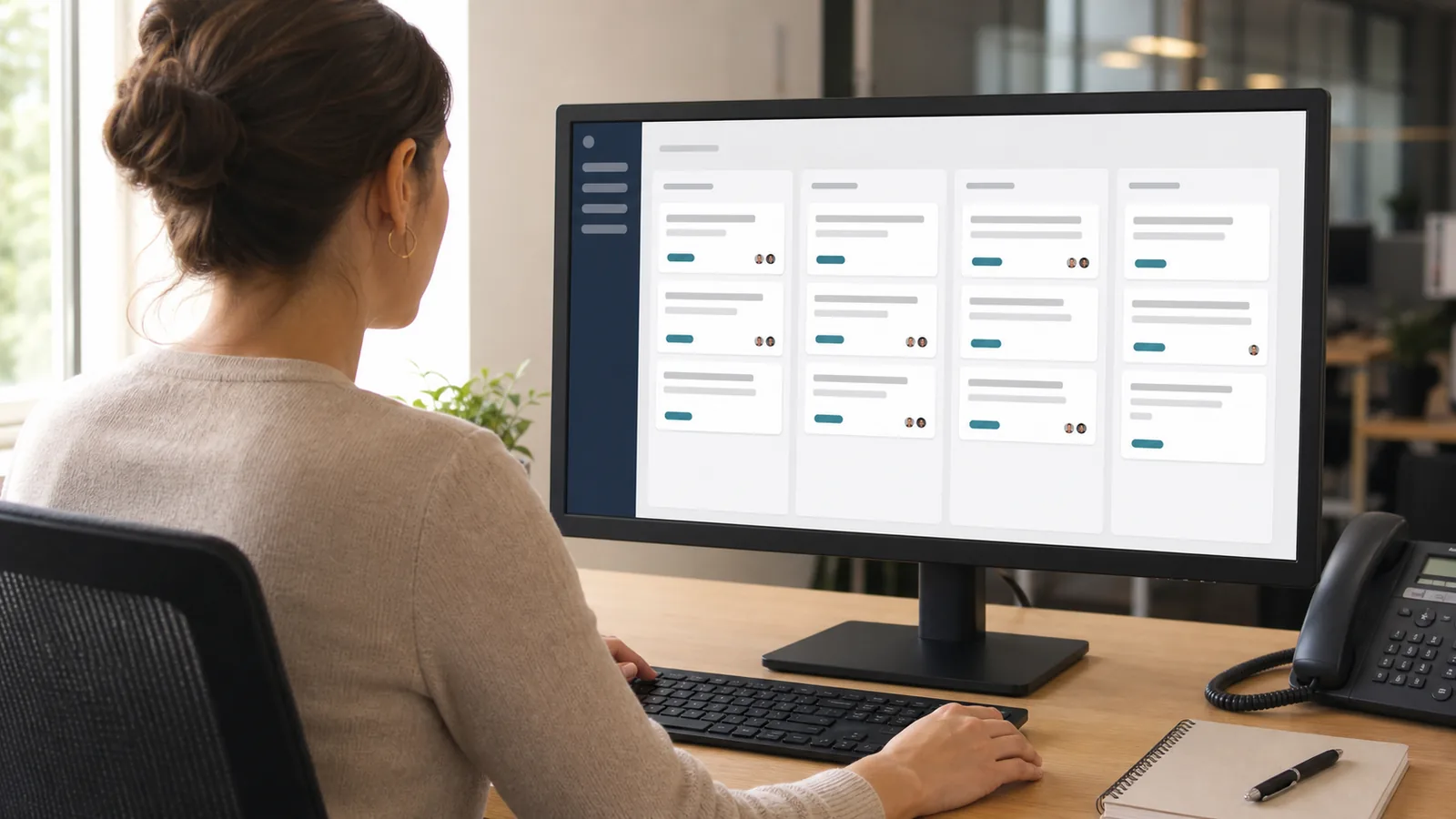
A deal pipeline with your own stages and a drag-and-drop board. Deal values are built from the products on the deal, so the forecast starts from what you would actually invoice, then weights it by stage probability and expected close date. There is more detail on the deal pipeline page.
Quotes and proposals built from packages. A proposal can carry several groups of products, each one fixed, a choice the customer has to make, or an extra they can skip. They open a private link, choose, and accept in their browser. See quotes and proposals.
A renewals radar listing every contract ending in the next 30, 60 or 90 days with the revenue at stake. The dates come from your service records, so there is nothing to maintain. With the PSTN switch-off due in January 2027, this is the queue most resellers need first.
Credit control that chases overdue accounts on a schedule rather than from memory, with staged reminders, promises to pay and a daily worklist. The ladder an account gets is chosen from how it is classified, so vulnerable customers are handled differently from commercial ones. It reads the invoice ledger directly and checks again before anything goes out, so a customer who has just paid is not chased. See credit control.
Will My Sales Team Have to Learn Billing?
No, and this is worth being clear about. Sharing data is not the same as sharing screens.
The CRM has its own workspace, its own layout and its own light and dark themes. A salesperson lands on their pipeline, not on a billing run. A credit controller lands on their chase queue.
Permissions are set section by section. A rep can have deals and quotes without invoices. A credit controller can have chase queues without the sales forecast. Managers can have both. It all stays inside one audit trail.
Can I Use It Without the Billing Platform?
Not at first. SAFE CRM is a module of the platform, and we are rolling it out to customers already billing with us. There is a trade-off worth being straight about.
The pipeline, quoting, proposals, sequences and conversations do not need the billing side. The renewals radar, margin watch, health scoring, credit control and go-live all read your billing and service data, and without it they have far less to work with. That is the main reason we are starting with existing customers.
Standalone use is a longer-term goal rather than a commitment, and whether we build it depends on whether people ask. If you bill elsewhere and want the CRM on its own, tell us, because that is the demand we would be measuring.
Most customers will run both, and that is the setup we would recommend. If you bill elsewhere today, talk to us and we will tell you honestly which parts would earn their keep.
When Can I Use It?
Soon. We are finishing testing with early access customers now.
SAFE CRM is a paid add-on rather than part of the core packages, so you only pay for it if your team will use it. Pricing sits alongside the billing packages on the Safe Online Billing pricing page.
If you would like to be among the first onto it, register your interest and we will show you how it works against your own customer base. The full feature detail lives on the SAFE CRM section, and the shared-data argument is set out in more depth on how shared data works.
Dr Paul Barrass
Founder & Technical Director, Safe Online Billing
Paul founded Safe Online Billing in 2005 and has built telecoms billing software for UK resellers for over 20 years. About the team →